


EARTHQUAKE DEPARTMENT

The Earthquake Department of theIstituto Nazionale di Geofisica e Vulcanologia It promotes research, technological development, and innovation in the geosciences related to earthquake and tsunami phenomena through a multidisciplinary approach.
It includes research activities aimed at understanding pre-seismic, co-seismic and post-seismic processes on topics ranging from the characterization of the seismic source, to the effects produced on the environment and on buildings, from the geodynamic and geological characterization of the context in which occur at the study of precursors.
These studies integrate with those on a global scale which aim at the observation, understanding and modeling of the phenomena that govern the Solid Earth, from its interior to its surface.
The Earthquakes Department aims at the development of basic and applied research, integrated with each other and which draw mutual benefit through the osmosis of knowledge between one area and another in the following main topics:
- Structure of the Earth
- Active Crustal Deformation
- Seismic source
- Seismicity of Italy
- Seismology, Geophysics and geology for seismic engineering
- Seismic and Tsunami Hazard Studies
- Variations of crustal characteristics and precursors
- Real Time Seismology
The Earthquakes Department carries out many service activities which involve direct interaction with society intended as the transfer of information and knowledge, promoting virtuous behavior during the occurrence of earthquakes or tsunamis. These activities benefit from the results of research to develop applications and products of interest to society. In particular, the service activities include seismic and tsunami monitoring and surveillance, carried out within the Framework Agreement with the Civil Protection Department, as well as all INGV institutional services (cartography, bulletins, databases, hazard maps, etc.) and consultancy services with local authorities (municipalities, regions, etc.) and state institutions (Carabinieri, armed forces, etc.).
Research and service activities are carried out in the Sections, technical-scientific organizational units and in the Centers dedicated to specific activities. The INGV sections involved are: National Earthquake Observatory Section, Rome1 Section, Naples Section (Vesuvian Observatory), Catania Section (Etna Observatory), Milan Section, Palermo Section, Rome2 Section, Bologna Section, Pisa Section .
The main service activities are briefly described below, referring further details to the dedicated pages.
Seismic Surveillance and Tsunami Warning: INGV's institutional tasks include seismic, volcanic and tsunami surveillance. INGV is also a fundamental component of the National Civil Protection System and performs the functions of Competence Center of the Civil Protection Department (DPC) for the monitoring of earthquakes, tsunamis and volcanoes.
Surveillance and warning activities for tsunamis of seismic origin in the entire Mediterranean are carried out by Tsunami Warning Center (CAT). After a few years of experimentation, the CAT became fully operational in 2016, at the level of the Intergovernmental Coordination Group for the Tsunami Early Warning and Mitigation System in the North-eastern Atlantic, the Mediterranean and connected seas (ICG/NEAMTWS), and from beginning of 2017 in the Italian system.
Seismic hazard: The Seismic Hazard Center (CPS) of the INGV is responsible for producing models for the estimation of seismic hazard on different time scales. Among its main objectives, the CPS has that of updating the Seismic Hazard Model for Italy (MPS04) created in 2004, published in 2006 in the Official Gazette and implemented in 2009 in the Technical Standards of Constructions for the definition of the seismic action .
Subsoil monitoring: The Subsoil Monitoring Center (CMS) is the structure that deals with the systematic detection of seismicity and soil deformation connected to anthropic activities of use of the subsoil for energy purposes (cultivation of hydrocarbons, reinjection of waste water, storage of natural gas , geothermal energy, mining, artificial reservoirs), their analysis and related research topics. The CMS, born in 2017 to respond to requests from the Ministry of Economic Development (MiSE), operates, pending the establishment of a specific ministerial fund, within the framework of agreements and conventions with MiSE-UNMIG and with local authorities to apply to some pilot sites – currently on an experimental basis – addresses and ministerial guidelines for monitoring. The CMS continuously acquires and processes the data of local seismic and geodetic networks operating in the domain of each concession to observe possible ground shaking or deformations possibly attributable to industrial activities.
Seismic microzonation: INGV also participates in the activities of the Center for Seismic Microzonation and its applications (CentroMS), established on the basis of an agreement between the CNR and other national scientific institutions, subsequently extended to INGV, ENEA and ISPRA. CentroMS has as its objectives the development of methodologies and updates on seismic microzonation studies and its applications, the promotion of theoretical and operational training, the supply of scientific technical support for the realization and coordination of studies, even in the first emergency phase .
The Earthquake Department uses the WEB and SOCIAL channels of the INGVterremoti platform for information on earthquakes and seismicity in Italy and for communication activities in the event of a seismic and tsunami emergency.


ENVIRONMENT DEPARTMENT
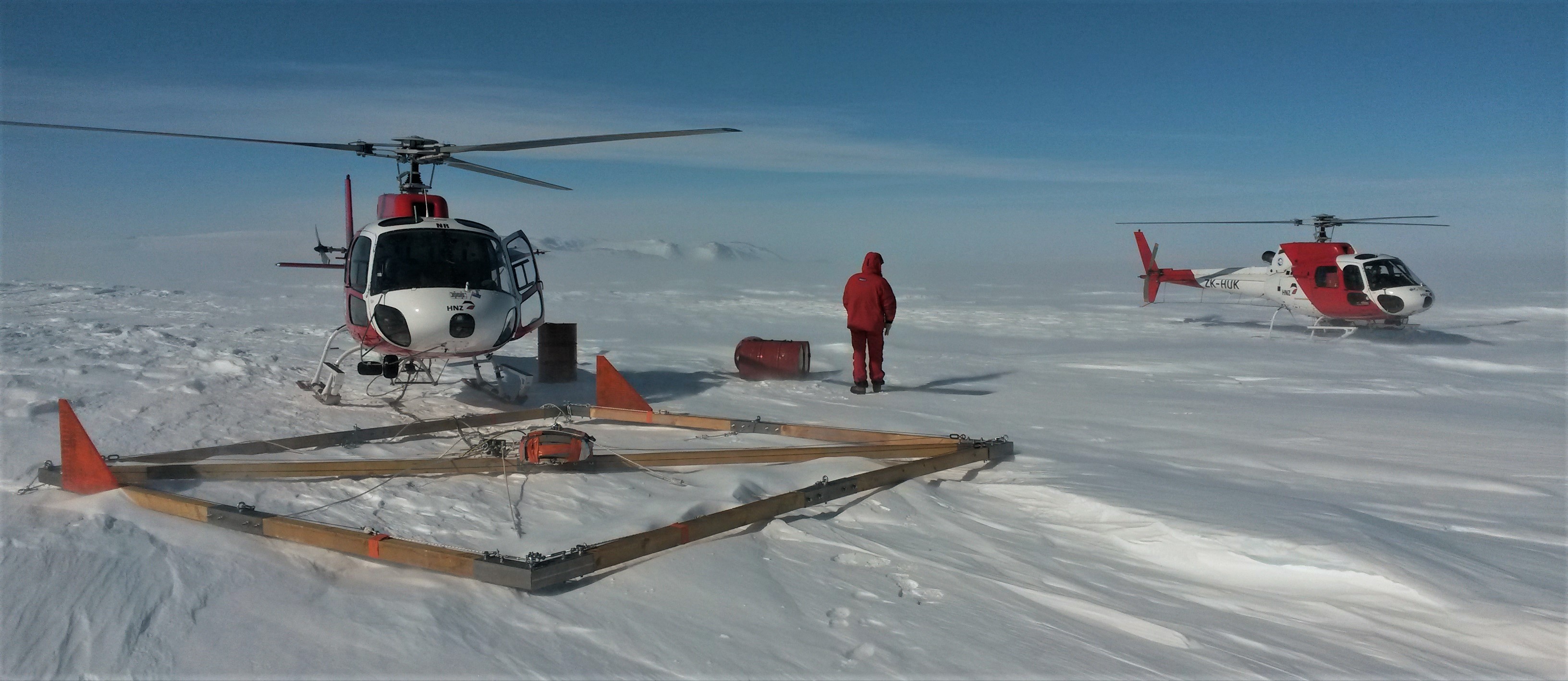
Phases of a RES survey on David Glacier in Antarctica.
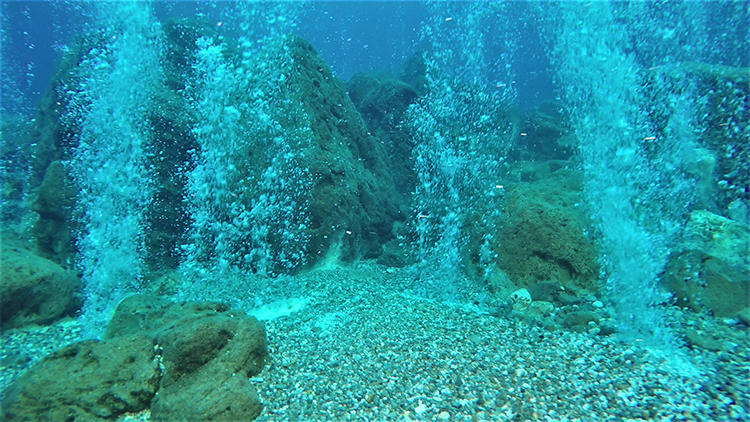
Images of submarine hydrothermal emissions off the coast of the island of Panarea. A natural laboratory where it is possible to explore and investigate the impact of gas emissions on the marine environment and on organisms. An ideal site for developing new generation technologies and instruments.
The Department of Environment of theIstituto Nazionale di Geofisica e Vulcanologia has a multidisciplinary nature.
It promotes research and studies in the context of a great variety of distinct scientific disciplines, sometimes even considerably different from each other, covering phenomena that touch all the "levels" of the planet, from the core to the outer margins of the magnetosphere and all the components: solid , fluid and gaseous. The researchers belonging to this department are dedicated to the study of a variety of natural processes that characterize the Earth system as a whole and that characterize the so-called geospheres (lithosphere, hydrosphere, cryosphere, atmosphere, magnetosphere) and their mutual interactions. These researches share the observation and study of natural geophysical and geochemical phenomena and their effects on the environment. The research conducted within the Department therefore aims to develop knowledge of critical elements of the Earth system and their reciprocal interactions. The set of research conducted in the Department of the Environment therefore has great potential for impact on the possibility of developing knowledge of the fundamental elements of the Earth system, with important repercussions both at a scientific level and for civil society.
The strategic objectives of the Department for the near future include highly topical topics on which the attention of both institutions and the scientific community, but also of the individual citizen, is highly focused:
- Climate and climate change: these researches are conducted in different physical regions of the globe – some particularly relevant for global and/or regional climate – on different time scales, even at a geological scale. In fact, a realistic estimate for future climate variability scenarios can be based on the study of natural climate variability over geological time.
- Phenomena related to Space Weather: research in this field concerns the study of the behavior of the Earth's magnetic field and of the upper ionized atmosphere (ionosphere) in the event of perturbation of solar origin and the potential impact of related phenomena on technological systems.
- Development of research and methodologies for the understanding and quantitative estimation of the risks associated with environmental phenomena on land and at sea, such as degassing phenomena, gravitational and geomorphological instability (landslides, soil uplift, sink-holes) also in connection with phenomena of seismic and/or volcanic activity.
- Development of research - scientific and technological - innovative and original for the application of geophysical and geochemical methodologies to the characterization of the Earth System environment as a whole and to monitor the natural and anthropic effects in different geological and social contexts.
Beyond the purely scientific field, there are many activities carried out in the Environment Department with implications and direct impact on society. Institutional research activities are generally carried out upon request and/or in agreement with various clients. In particular, in this area the activities include both institutional services with a long tradition (such as the production of cartography, the production and distribution of monthly and yearly bulletins and the supply of ionospheric forecasts, etc.) and the activities carried out upon request specific for consultancy with local authorities (municipalities, regions, Arpa) and state institutions (Carabinieri, Armed Forces, Coast Guard and Ministry of the Environment).
The service activities therefore include the monitoring of various components of the Earth system (observations of the Earth's magnetic field, the ionosphere, seas and oceans) and the related provision of services, both for mapping and for forecasting their evolution at different time scales; the formulation of sea level rise scenarios in coastal areas at risk of high environmental and cultural value; activities carried out for national anti-terrorism security and technical consultancy for international security; interventions aimed at characterizing the geological conditions of the subsoil; prospecting for the identification, detection and monitoring of environmental pollution phenomena (subsoil, water, air); definition of conceptual models of groundwater bodies aimed at drafting "Water Management Plans"; detection of the level of natural radioactivity in soils, groundwater and indoors.
The Department's activities take place in the Sections, technical-scientific organizational units, where research, monitoring, surveillance and infrastructure management activities are carried out.
The sections involved are:
- Section Rome2
- Section Rome1
- Section of the National Earthquake Observatory
- Section of Bologna
- Section of Pisa
- Section of Catania (Etna Observatory)
- Palermo section
- Section of Naples (Vesuvian Observatory)
- Milan section
Since mid-2018, the Environment Department, similarly to the other departments of the institute, has decided to make use of a communication platform that includes a blog and social channels, as schematized in the figure.

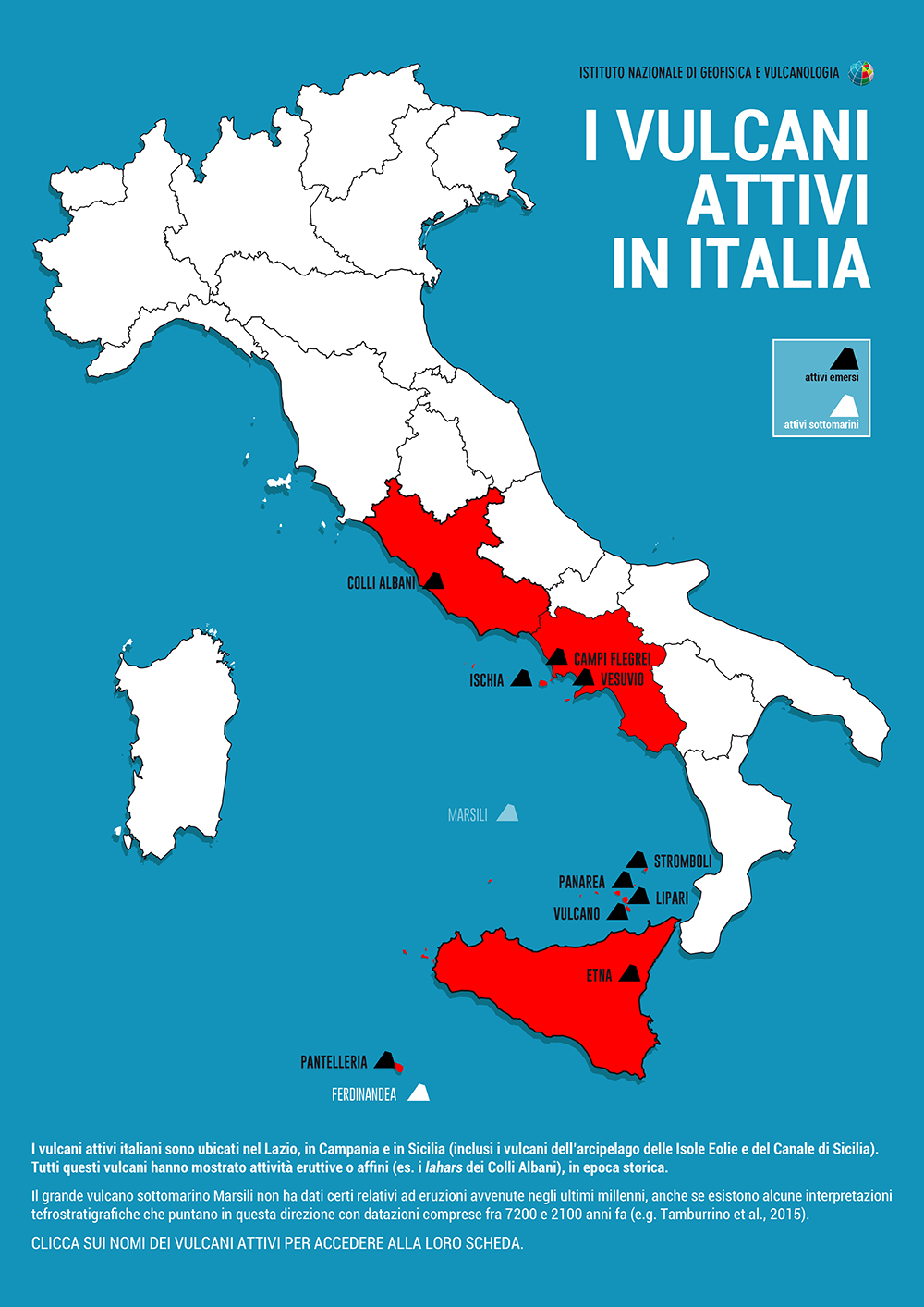
VOLCANOES DEPARTMENT
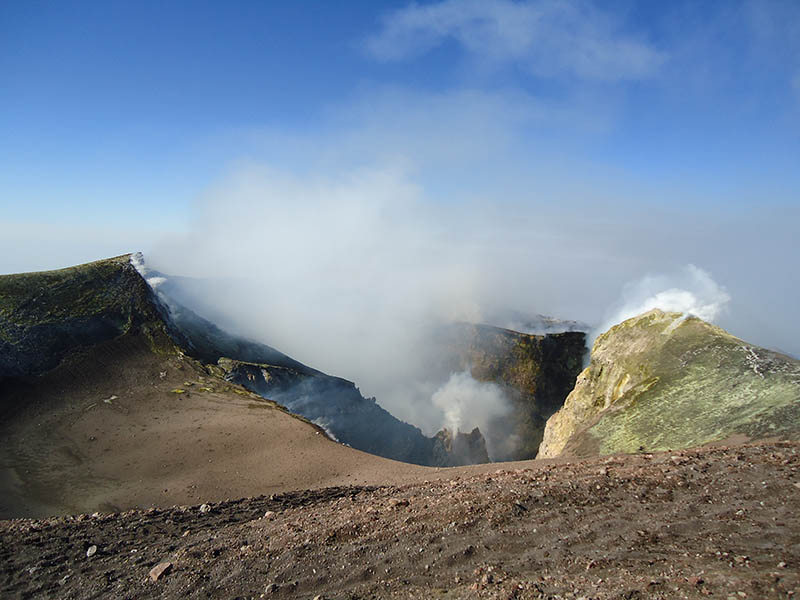
Volcanic activity has always affected every corner of our planet. Eruptions occur at the bottom of the oceans and on top of massive mountain ranges, under polar ice and in the middle of deserts, as well as in densely populated areas, such as Italy.
The products of volcanic eruptions modify the landscape, create and destroy land, introduce gases and particles into both the atmosphere and the oceans, and thus influence the evolution of life on Earth. Studying volcanic deposits and the processes that generate them helps us understand the continuous evolution of our planet and can indicate useful strategies for sustainable development and the protection of areas exposed to volcanic activity.
Knowing the active volcanoes also serves to estimate their danger, and therefore to develop strategies for risk mitigation. Precisely for this reason, the INGV Volcanoes Department does not limit itself to monitoring the active volcanoes present on the Italian territory but carries out research and interventions on several areas, in Italy and abroad, where volcanic systems, active or extinct, can provide indications useful for understanding the evolution of volcanic phenomena. The study of the physical and chemical processes that occur in volcanic areas requires different and complementary methods which include:
- field activities (collection of rock and gas samples, cartography, measurement campaigns, installation of monitoring networks);
- laboratory research (analysis of collected samples, analog models and experiments);
- elaboration of models (conceptual, physical-mathematical, statistical) for the simulation of the phenomena and the joint interpretation of the collected data.
The integration of these results allows to make an estimate of the danger of a volcano. This estimate is never an exact assessment nor a deterministic prediction of future behavior: volcanoes are complex systems whose deep structure is poorly understood because, in fact, it is inaccessible. However, we can develop different evolutionary scenarios and express the danger in probabilistic terms, trying to quantify when possible also the inevitable uncertainty that characterizes our estimates.
The researchers belonging to the Department carry out studies and research and/or contribute to the monitoring, surveillance and management of the infrastructures in many Sections of the Institute. The INGV sections involved are: Naples Section (Vesuvian Observatory), Catania Section (Etna Observatory), Palermo Section, Rome1 Section, Rome2 Section, National Earthquake Observatory Section, Bologna Section, Pisa Section
Since mid-2018, the Volcanoes Department, similarly to the other two Departments of the institute, has decided to make use of a communication platform that includes a blog and social channels.